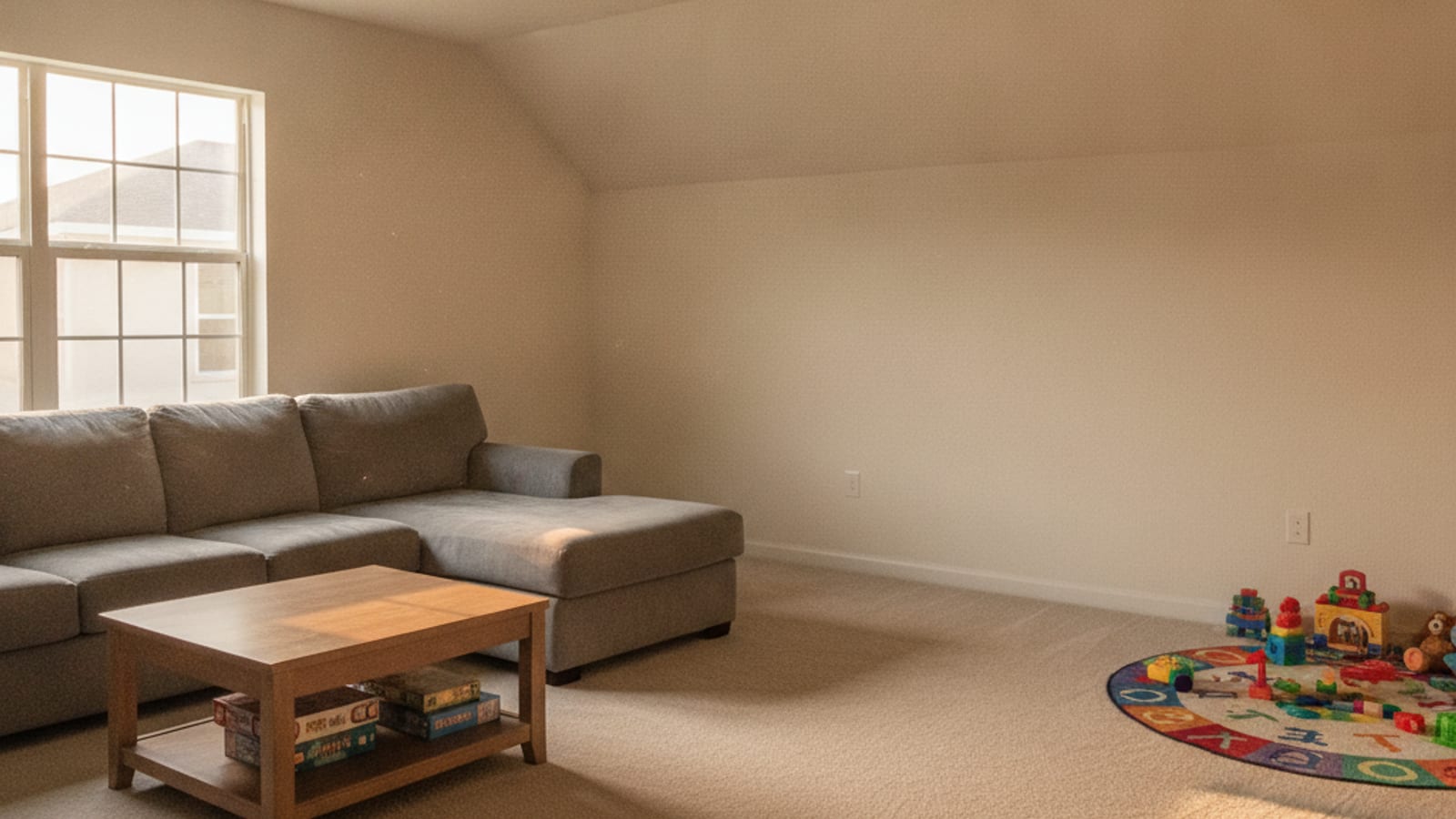
Almost every two-story floor plan builders have put up across Wesley Chapel, Meadow Pointe, and the surrounding master-planned communities over the last decade includes some version of a bonus room. Sometimes it’s marketed as a media room, sometimes a flex space or loft, tucked above the garage or at the end of the upstairs hallway. Whatever it’s called on the floor plan, it’s usually the room a homeowner mentions first when the conversation turns to comfort complaints, because it’s almost always the warmest room in the house.
Why this specific room is always the problem
Bonus rooms tend to sit at the far end of the ductwork’s branch runs, meaning conditioned air has to travel the longest distance to reach them, losing some of its cooling capacity along the way through duct friction and any heat gain in an attic run. They’re also frequently located above the garage, a part of the house that isn’t conditioned space below, which means the bonus room’s floor is essentially sitting over unconditioned attic-level temperatures rather than over another cooled room like most of the rest of the upstairs.
Add in that these rooms often get a single supply vent, sized during original construction as if the room were a minor afterthought rather than genuine living space, and the pattern makes sense. It’s not bad luck that your bonus room runs warm. It’s a predictable outcome of how these spaces get plumbed onto the main system as an afterthought rather than a planned zone.
The symptoms that point to this specific cause
A bonus room comfort complaint usually has a distinct signature. The room is consistently the warmest space in the house, regardless of season or time of day. The thermostat, mounted elsewhere in the house, keeps calling for cooling because it’s reading the temperature where it’s mounted, not in the bonus room, so the system runs and runs without ever satisfying the room that actually needs the airflow. And closing the door to the bonus room, which some homeowners try as a fix, often makes the problem worse rather than better, since it cuts off what little airflow was reaching the room in the first place and disrupts the return-air path for the rest of the upstairs.
If that pattern matches your Wesley Chapel or Meadow Pointe home, the underlying cause is very likely the same afterthought-zoning issue that shows up in bonus rooms across this corridor, not a defect specific to your house.
Two real fix options
There are two legitimate ways to address this, and which one makes sense depends on the room’s use and your budget. A duct-extension approach adds a second supply run, or enlarges the existing single run, to increase the volume of conditioned air actually reaching the room, sometimes paired with a return-air grille if the room doesn’t have one, which improves overall circulation rather than just supply. This keeps the room on the main system and doesn’t add a second piece of equipment to maintain, but it depends on there being reasonable access and routing available in the attic above the room, which isn’t guaranteed in every floor plan.
A single-zone mini-split is the other option, and it’s often the more reliable fix for a room that’s chronically underperforming rather than just mildly warm. A dedicated indoor unit gives the bonus room its own thermostat and its own cooling capacity, completely independent of whatever the rest of the house’s system is doing. For a media room or a home office where consistent temperature actually matters, that independence is valuable beyond just solving the heat problem, since the room’s comfort no longer depends on the whole-house system’s cycle.
What each option costs
A duct-extension fix generally runs less than a mini-split installation, since it doesn’t require new equipment, typically landing in the low hundreds to low thousands depending on the routing complexity and whether attic access is straightforward. A single-zone mini-split for a bonus room-sized space runs closer to $3,500 to $5,000 installed, reflecting the cost of the dedicated indoor and outdoor units and the electrical work to support them. The right call depends on whether the duct-extension approach is even feasible given your specific attic layout, which is worth having assessed on-site before assuming either option by default.
Why closing the door often backfires
It’s a natural instinct to close off a room that’s uncomfortable, and plenty of homeowners do exactly that with a warm bonus room, treating it as unused space and shutting the door for good. This tends to make the underlying problem worse rather than solving it. Central air systems are designed around a certain amount of air returning to the air handler to be recirculated, and closing a door without a dedicated return-air path for that room disrupts the pressure balance in the whole upstairs zone, sometimes making adjacent rooms less comfortable too, not just leaving the bonus room itself neglected.
If a bonus room has been closed off for years as a workaround, that’s worth mentioning specifically during a diagnostic, since reopening it as part of an airflow fix sometimes reveals the room performs noticeably better than expected once actual attention goes into its supply and return setup, rather than just being written off as an unusable space.
What this room’s use should drive in the fix
Not every bonus room needs the same solution, and how the space actually gets used matters. A media room or home theater used mostly in the evening has different priorities than a home office used daily during working hours when the sun angle is different. A guest room used only occasionally might not justify a mini-split’s cost the way a daily-use home office does. Being specific with your technician about how the room actually functions in your household, not just that it runs warm, helps match the fix to the real use case rather than applying a generic solution to every bonus room regardless of how it’s lived in.
Humidity is often part of this story too
A chronically warm bonus room sometimes comes with a secondary humidity complaint, since a room that’s not getting adequate airflow also isn’t getting adequate moisture removal. If your bonus room feels muggy as well as warm, it’s worth mentioning during the diagnostic, since that combination sometimes points toward pairing the airflow fix with a broader indoor air quality conversation, particularly if the room is used as a home office or guest space where humidity control matters for more than just comfort.
Getting an honest assessment
Not every bonus room needs a mini-split, and not every one can be fixed with a simple duct extension. The right answer depends on attic access, how far the room sits from the main trunk line, and how the room is actually used day to day. A real on-site assessment, checking actual airflow at the existing vent and looking at what routing options exist in the attic, is worth doing before committing to either fix.
Will adding a second supply vent to my bonus room fix it on its own?
Sometimes, but not always. If the room is only getting a trickle of air because the branch duct itself is undersized or restricted, adding a vent without addressing the underlying duct run just splits the same limited airflow between two openings instead of one. A technician needs to check actual duct capacity before adding vents, not just add supply points and hope for better distribution.
Is a bonus room over the garage always going to run warmer than the rest of the house?
It will likely run somewhat warmer than an upstairs room over conditioned space below, given the unconditioned garage underneath, but a well-executed airflow fix and adequate insulation can close most of that gap. A five-plus degree difference that persists despite a fix being attempted usually means something in the fix itself needs revisiting.
Can I add a bonus room to my existing zoning system instead of installing a separate mini-split?
If your home already has a zoning system installed, adding the bonus room as part of an existing zone or a new zone is often possible and can be more cost-effective than a standalone mini-split. This depends on your specific zoning equipment’s capacity and configuration, which a technician familiar with your system can evaluate.
If the bonus room in your Wesley Chapel or Meadow Pointe home has been the house’s problem child since move-in, call (813) 000-0000 and we’ll connect you with an experienced, insured local pro who can assess your specific attic layout and tell you honestly which fix actually makes sense.